

“>
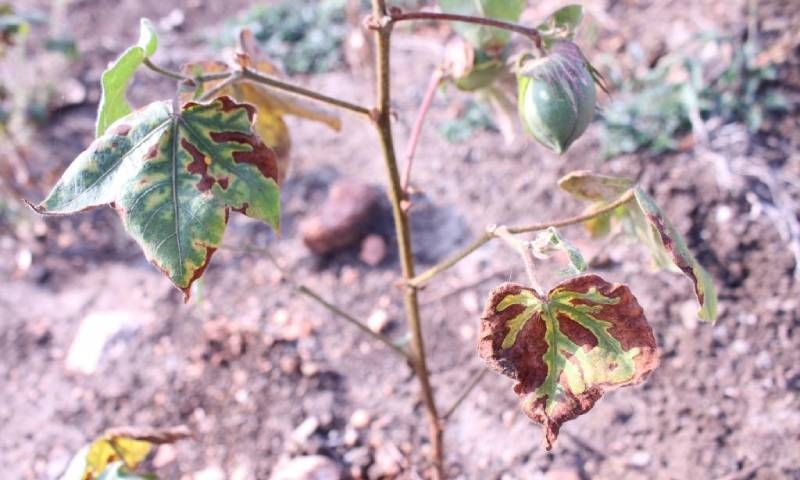
Photo: https://gd.eppo.int/ Verticillium wilt in cotton
An international research team has identified a region of the genome in the pathogenic fungus Verticillium dahliae responsible for producing a specific protein that the pathogen releases during the infection process, AgroPages reports.
This protein causes leaf drop in host plants and determines the pathogen’s virulence.
It is noted that the most virulent strains of Verticillium dahliae, the pathogenic fungus that causes Verticillium wilt, lead to complete leaf loss (defoliation). This results in the death of affected plants and, consequently, significant crop losses. (In Ukraine, this disease primarily affects sunflowers, while scientists have studied pathogens most prevalent in olives and cotton — editorial note).
Read also: Facts about the 10 most common sunflower diseases
Until now, the genetic mechanisms by which Verticillium dahliae causes this leaf loss were unknown.
“The gene for the leaf-drop-inducing protein was found on a so-called ‘Starship’. These are huge mobile genetic elements that can be transferred between different fungal species and carry genes, including the gene responsible for leaf drop. Genetic analyses have revealed remnants of a putative ‘Starship’ carrying the leaf-drop gene in several other wilting fungi,” explains Professor Bart Thomma.
Understanding the genetic mechanisms by which Verticillium dahliae causes such an aggressive disease can contribute to the development of new methods for combating plant diseases—through improved, specific detection of the most aggressive isolated strains, as well as through breeding or genetic modification of resistant plants.
Alla Husarova, SuperAgronom.com


Be the first to know the latest agronomic news from Ukraine on our Facebook page, Telegram, and subscribe to SuperAgronom’s Instagram.