

>
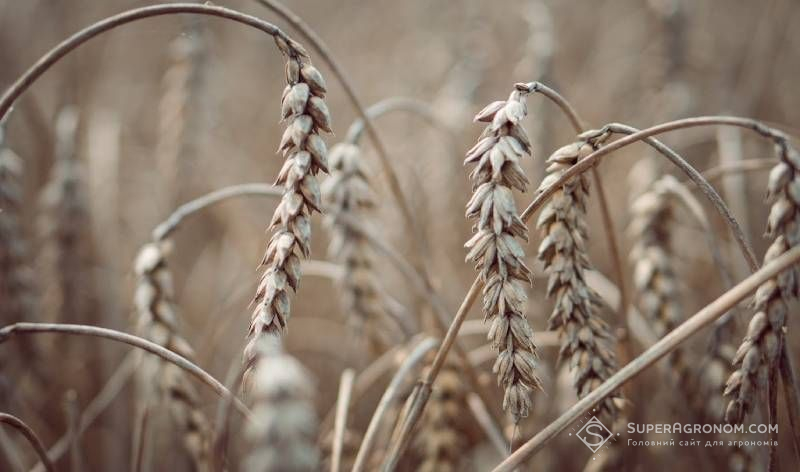
Photo: SuperAgronom.com
Agro-climatic conditions (rain and moderate air temperatures) have contributed to the development and spread of diseases in agricultural crops. This is reported by specialists from the State Service of Ukraine on Food Safety and Consumer Protection in their latest weekly phytosanitary report.
As of November 16, diseases of the ear are developing in the fields of winter and spring grains on unharvested areas.
- Fusarium ear blight has been detected on 3-22% of the area, affecting 0.3-5% of ears in outbreaks in Vinnytsia, Volyn, Dnipropetrovsk, Ivano-Frankivsk, Zhytomyr, Kyiv, Lviv, Rivne, Ternopil, and Kherson regions.
- Septoria ear blight is present on 7-20% of the area, affecting 0.4-9% of ears (Volyn, Dnipropetrovsk, Lviv, Rivne, Poltava, Kyiv, Ternopil, Kherson, Cherkasy, and Chernihiv regions).
- Alternaria ear blight has infected 2.6-4% of ears (Volyn, Dnipropetrovsk, Ternopil, and Kherson regions).
- Olive mold has affected 0.5-25% of wheat ears in outbreaks in Volyn, Zakarpattia, Odesa, Rivne, and Ternopil regions.
- In the western regions, white ear is observed on 2-5% of plants.
Read also: Wheat Septoria: proactive work and the fight for plant health
Additionally, in the Chernihiv region, Helminthosporium leaf blight is developing on barley. 2-14% of grain plants are affected by brown leaf rust. In the Zhytomyr region, septoria, powdery mildew, and red-brown spot have been detected on 1-5% of oat plants. In the Volyn and Zhytomyr regions, ergot has been found on 1.2-5% of ears in rye fields.
Specialists advise conducting a phytopathological seed examination after harvest and, if disease pathogens are prevalent, deciding on the choice of seed treatment and timely sanitation of planting material.
Alla Husarova, SuperAgronom.com
Read also: Fusarium ear blight – what affects the intensity of the infection background
Be the first to know the latest agronomic news from Ukraine by following us on Facebook, Telegram, and subscribing to SuperAgronom’s Instagram.