

“>
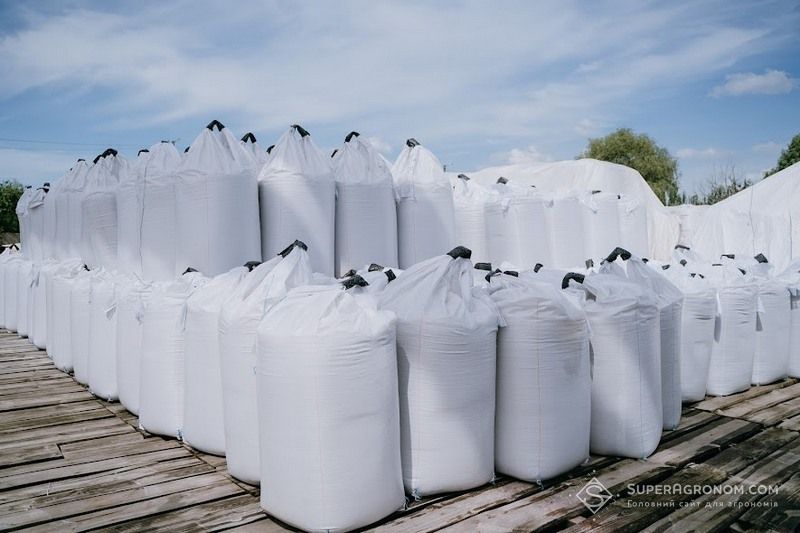
Photo: SuperAgronom.com
The direct threat to fertilizer supplies due to events in the Black Sea is less significant than news headlines might suggest. Recent strikes, including the prominent one on the dry cargo ship Golden Leo on July 19, and prior attacks on three vessels on July 14, targeted ships carrying export grain and corn, not import fertilizer shipments.
This was explained in a comment to SuperAgronom.com by experts from the SANAGRO UKRAINE team.
“In other words, the Black Sea for us today is primarily a factor of logistics costs, not the physical availability of goods. And this factor is currently intensifying: according to insurance market estimates, additional war risk premiums for Black Sea transit have just exceeded 1% of the vessel’s value (by some estimates — up to 1.5%), rising precisely on the wave of recent attacks. Existing insurance mechanisms involving the UK and Ukrainian state banks have historically helped to mitigate such spikes and bring rates closer to the baseline between incidents, but we are currently in a phase of active premium growth, not stabilization. Therefore, I would talk not about the risk of supply disruptions as such, but about the gradual and currently accelerated accumulation of a logistics premium in the cost of goods,” explained the specialists.
There is no shortage of mineral fertilizers, according to SANAGRO Ukraine. However, the “more important factor” is not the Black Sea, but Iran.
Read also: The Art of Plant Nutrition: Optimizing Nitrogen Feeding Considering Fertilizer Prices and Climate Change
Following the start of the US and Israeli conflict with Iran at the end of February, the Strait of Hormuz, through which about a third of global urea and a quarter of ammonia trade passes, has virtually halted: Qatar suspended the production of urea, ammonia, and sulfur due to damaged facilities, and Iran stopped ammonia production. The consequence was a 80% surge in global nitrogen fertilizer prices by April, to over $850/ton, the highest level since 2022. A temporary ceasefire followed, traffic in the strait partially resumed, and by early July, prices had even returned below pre-war levels. This created a favorable window for purchases, which a portion of the market has already utilized.
“An important clarification for our market here: this refers primarily to the global price benchmark. How directly Ukrainian purchases of nitrogen fertilizers depend on the Persian Gulf and the Strait of Hormuz, rather than on European production or other supply routes, is a separate question that should be clarified with suppliers before directly applying global price dynamics to the local situation. But the signal itself remains: the issue now is not “will there be enough volume?” but “will farmers manage to buy before this price window closes?”. And it is closing faster than it seemed just two weeks ago,” emphasize the specialists.
Sea shipments of finished products through Odesa region pose a risk of localized delays, not mass disruption: the existing insurance mechanism mitigates local shocks after each incident, although currently, as mentioned above, it does so against a backdrop of generally rising premiums.
Another matter is contracts tied to the production capacities of the Persian Gulf itself. Here, the risk is more substantial and grows daily: on July 8, Trump announced the end of an agreement with Iran, after which new strikes followed, and on July 18, Iran officially announced the suspension of its obligations under the memorandum (not a final breakdown, but a suspension of performance, placing responsibility on violations by the US), and traffic through the strait dropped to a five-week low.
“If this escalation solidifies, those nitrogen fertilizer contracts where the price or delivery term is linked to Middle Eastern producers or region-oriented quotes will be the most vulnerable. Revisions to terms are much more likely there than with Black Sea logistics — and the formal “suspension”, rather than a breakdown, means the situation could reverse in either direction as quickly as it escalated,” note SANAGRO UKRAINE.
Two risk factors, experts believe, are currently moving in the same direction, changing the very logic of the forecast. At the beginning of July, the market was counting on further price reductions and advised farmers to wait with purchases. But according to operational data from Argus, nitrogen fertilizer prices in Europe are already rising again in sync with the new phase of the Iran-US confrontation.
The history of the last five months shows how sharp the amplitude can be: from a peak of +80% in April to a fall below pre-war levels in two months and a new reversal within another two weeks.
“If the current escalation develops into prolonged instability, one likely scenario is a repeat of the March-April price surge, which this time will overlap with the growing Black Sea logistics premium, rather than acting separately from it. This is a risk assessment, not a guaranteed forecast: the formal “suspension”, rather than the breakdown of the Iran-US agreement, leaves open the possibility of rapid de-escalation just as well as further escalation. However, given the current dynamics, the tactic of “waiting a little longer in anticipation of further price drops” appears riskier today than two weeks ago, and the window for favorable purchases is most likely closing earlier than the seasonal schedule predicted,” conclude the experts.


Olena Basanets, SuperAgronom.com
Be the first to know the latest agronomic news from Ukraine on our Facebook page, Telegram, and subscribe to SuperAgronom’s Instagram.