

“>
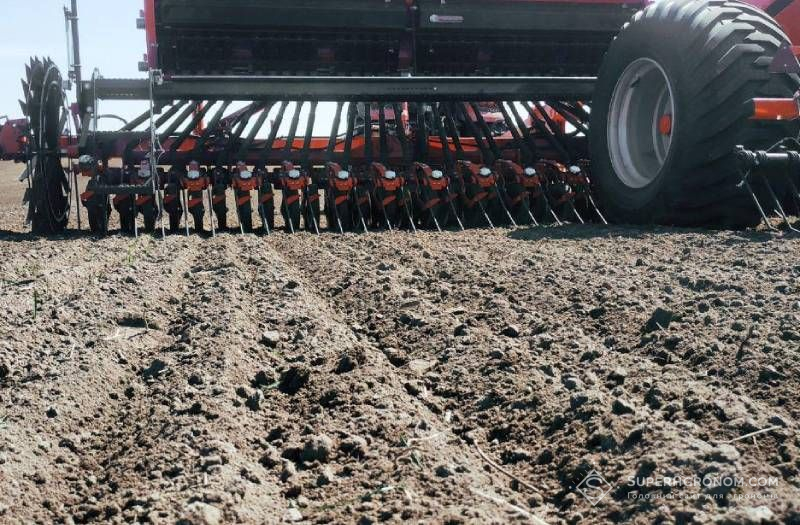
Photo: SuperAgronom.com
All recommendations involve ensuring an initial supply of nutrients before sowing. Applying the main quantity after sowing is not a comprehensive solution, which is related, among other things, to the movement of phosphorus in the soil, or more precisely, to the minimal mobility of this nutrient, writes Farmer.pl.
It is noted that the low mobility of phosphorus is a crucial factor in this context. Even under favorable conditions, this element can only move about 0.4 mm per day. If it is not incorporated into the soil by mixing during pre-sowing application, it will take a very long time to reach the zone where it can be absorbed by the plant if added after sowing. Meanwhile, phosphorus influences root development.
The Art of Plant Nutrition Read
It is also worth noting that ideally, it should be applied at a depth of about 10-12 cm.
However, if for various reasons NPK fertilizers were not applied before or during sowing, it is advisable to apply them soon after. But in this case, there is no possibility to mix the granules with the soil – so, for it to have any effect, such application must be carried out before the rains begin.
“The main problem with top dressing is its reduced effectiveness, particularly due to the lack of phosphorus at the very beginning. This nutrient will no longer perform all the functions it offers during pre-sowing fertilization. It is worth noting that phosphorus can promote root system development right from the start. Phosphorus applied with the seed, figuratively speaking, attracts the root. This phenomenon is called tropism. It can increase the dynamics of root system development from the very beginning. Later application loses this effect,” the message states.
Nitrogen and potassium are added throughout the growing season with any technology, but the mobility of these nutrients is significantly higher. Experts indicate that it takes approximately 2-3 mm of water per square meter for nitrogen (in nitrate form) to move 1 cm into the soil. Potassium is less mobile, although significantly more so than phosphorus, which moves through the soil very slowly.
If the initial dose of potassium is too low compared to the needs, its subsequent application will be most effective.
Alla Husarova, SuperAgronom.com
Read also: Elixir Group Mineral Fertilizers: Complex NPK, NP, and Chlorine-Free Fertilizers for Ukrainian Farmers
Be the first to know the latest agricultural news from Ukraine on our Facebook page, Telegram, and subscribe to SuperAgronom’s Instagram.
–>