

“>
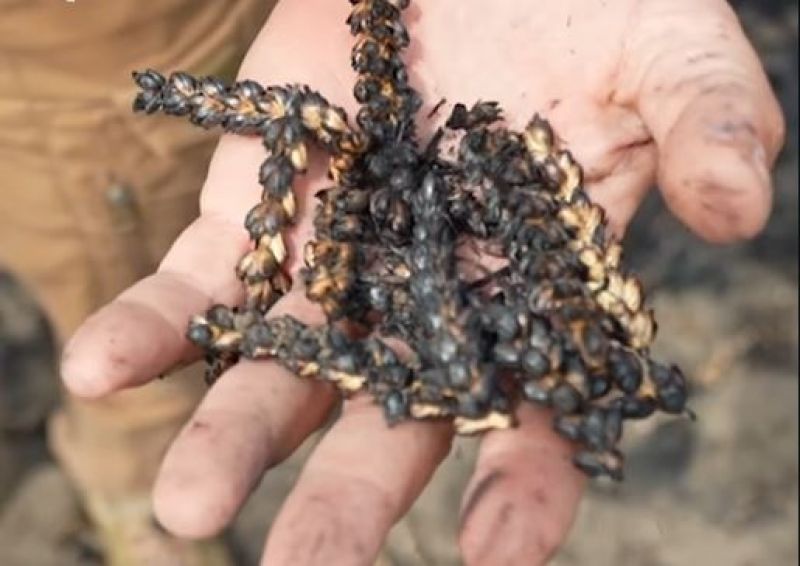
Photo: Screenshot from mykola_farmer video
In the Zaporizhzhia region, agricultural producers continue to lose access to land due to intensified Russian shelling and drone assaults. While before the full-scale invasion approximately 1.88 million hectares of arable land were cultivated in the region, last year only about 380,000 hectares remained under crops. This year, the cultivated area may decrease by another 20,000 hectares, reaching approximately 360,000 hectares.
This was reported by “Aktsent,” citing the words of Valentyna Kramarenko, director of the Department of Agro-Industrial Development of the Zaporizhzhia Oblast State Administration.
Precisely because of the threat posed by FPV drones, farmers are compelled to abandon plots in Orikhiv district, Bilenke, Komyshuvasy, Ternuvate, and other communities. The fields have effectively transformed into a combat zone.
Mykola Hrabko, head of the “Mykola Pole” farming enterprise from Komyshuvasy, shared the challenges faced by farmers in frontline communities. According to him, the enterprise can no longer operate on approximately 230 hectares, where winter wheat and rapeseed were still grown in 2025.
Another approximately 250–270 hectares were sown with sunflowers, but access to these fields has also been lost due to intensified attacks.
Read also: Heavy Metals in Ukrainian Soils: What the Analysis of 8000 Samples Along the Front Line Shows
Drones pose a threat not only to people but also to agricultural machinery. According to the farmer, FPV drones target cars, trucks, combines, and other equipment. A separate issue is field fires: downed or suppressed drones, neutralized by electronic warfare systems, fall onto dry vegetation, causing crops to ignite.
Due to the danger, the enterprise has completely ceased nighttime operations. Simultaneously, mobile communication in the area is largely absent due to damaged infrastructure. To maintain contact and monitor employee safety, the farmer personally purchased drone detectors, Starlink, and radios.
Another problem involves explosive ordnance on the fields. During land preparation for sowing, agricultural workers discover unexploded FPV drones, “Molniya” munition, missile fragments, and other explosive devices. Some dangerous items must be documented and reported to rescuers, and after explosions, farmers independently clear debris from the fields.
Consequently, conducting ordinary fieldwork in the frontline zone becomes a constant combination of agricultural production and security measures. The timing of work, movement of machinery, and access to specific fields are determined not so much by the crop’s technological needs as by the situation at the front.
Problems also arise after harvest. Due to the danger, truck drivers refuse to travel to frontline territories, making grain export difficult. One of Mykola Hrabko’s farm’s harvests had to be stored at a relative’s warehouse. A UAV strike caused the warehouse to catch fire, and the farmer, who was about 15 meters from the explosion site, suffered a concussion.
In addition to security and logistical challenges, farmers face financial difficulties. The war limits the capacity of farms to generate income from product sales and invest in production, while loan obligations remain. This restricts local farmers’ access even to state support.
Read also: Hellish Harvest 2026: How Russia is Scorching Kherson’s Crops
Against this backdrop, the reduction in sown areas in the Zaporizhzhia region is a consequence not only of direct crop destruction or equipment damage. A portion of the land effectively becomes inaccessible for cultivation due to the threat of FPV drones, landmines, lack of safe access, and the inability to ensure normal logistics.
The situation in the Zaporizhzhia region indicates that for frontline farms today, it is not just about crop losses. The war is gradually reducing the area of land that can be safely cultivated, complicating fieldwork, product storage, and transportation, and increasing the financial burden on farms.
Mr. Mykola states that he does not consider his work finished, as he is still alive. However, whether people will want to return to farming on scorched and mined lands after the war is a question he currently cannot answer.
Alla Husarova, SuperAgronom.com
Be the first to know the latest agronomic news from Ukraine on our Facebook page, Telegram, and subscribe to SuperAgronom’s Instagram.