

“>
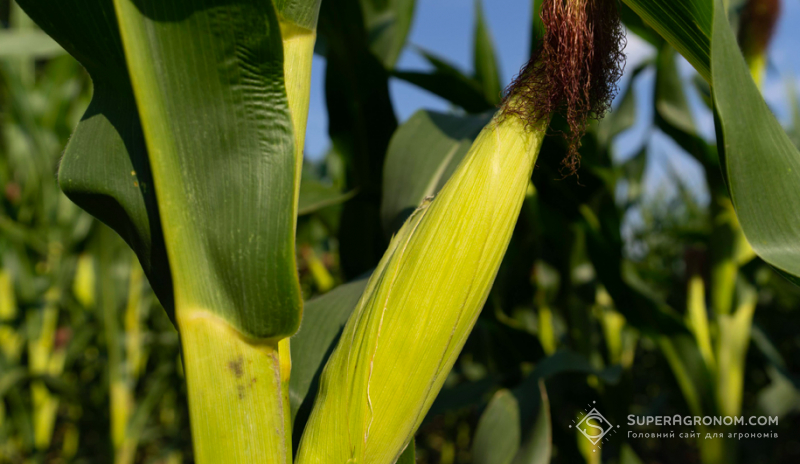
Photo: superagronom.com
AgroExpedition Milk 2026, supported by “KWS-UKRAINE” and Credit Agricole Bank, visited PSP “Novoselytsia” in the Zhytomyr region. The enterprise well understands that even the most modern equipment cannot save a farm without proper feeding.
“The most important thing is high-quality haylage and high-quality silage. When these are available, good results can be achieved and the cost of milk production can be low,” says director Mykola Berezovsky.
Therefore, this year, the farm has focused, in particular, on silage corn hybrids of KWS breeding from different maturity groups. This approach allows for extending the harvesting periods and selecting the optimal time for silage preparation for each hybrid.
As Konstantin Pavlichenko, KWS-UKRAINE sales representative in the Zhytomyr region, explains, PSP “Novoselytsia” planted three hybrids: KWS®AMAROS (FAO 230), KWS®BIGBIT (FAO 290), and KWS INTELEGNS (FAO 380).
This year, weather conditions will significantly impact harvesting schedules; due to aerial and soil drought, it is crucial not to miss the optimal phase for preparation.
As noted by Yuriy Nedyak, KWS-UKRAINE sales representative in the Kyiv region, the very attitude towards silage corn is also changing today.
“Corn for silage today cannot be a secondary product of agronomy or crop production. We must think about the efficiency of every hectare of land and every kilogram of feed we give to the animals,” he says.
In other words, saving on silage corn through fertilizers or herbicide protection is no longer a strategy that allows for maximum efficiency in dairy production.
Corn for silage must be equivalent to grain corn. It is necessary to study the silage direction more deeply and work more effectively for your business to thrive.
According to KWS-UKRAINE specialists’ estimates, to obtain 40 tons of green mass for silage, the mineral nutrition of corn must correspond approximately to the level required for obtaining 9.5–10 tons of grain. If the goal is 60 tons of green mass, the nutrition level should also be higher — approximately at the level of 11–12 tons of grain corn.
Another important point is to properly organize the silage conveyor, where silaging begins with hybrids with lower FAO and gradually moves to later ones. This allows for distributing the workload on equipment and preparing each hybrid in the correct phase.
“We have clients who start silaging with FAO 230, for example, the KWS®AMAROS hybrid. Then they add FAO 290 and then move on to 300+,” notes Yuriy Nedyak.
Alla Husarova, SuperAgronom.com
Be the first to learn the latest agronomic news from Ukraine on our Facebook page, Telegram, and subscribe to SuperAgronom’s Instagram.