

“>
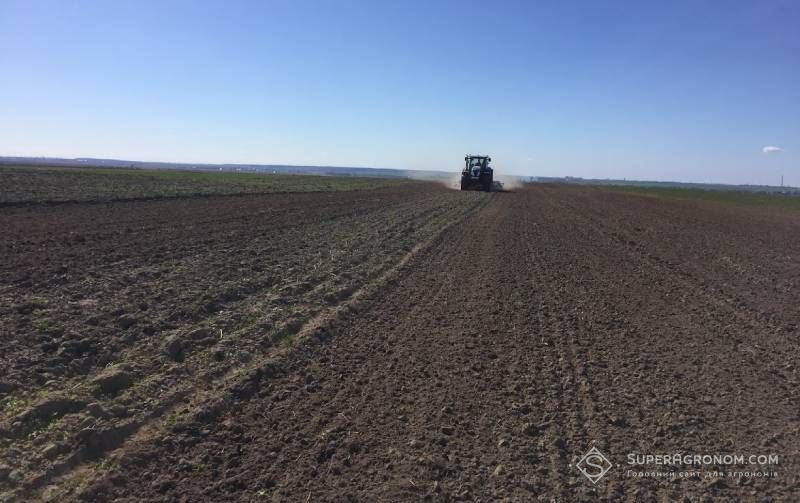
Photo: SuperAgronom.com
Although no-till farming is gaining popularity, not all Polish farmers are following these trends. For example, the Rutkowski farming family has no intention of abandoning plowing. This is not because the family distrusts new technologies. On the contrary. They have been using them for years, but they treat them as tools designed for specific field conditions, writes Farmer.pl.
The farm is located in the Żuławy region — a low-lying area in northern Poland. And although the no-till farming system allows for fewer passes, improves soil structure, and better moisture management, Zbigniew Rutkowski notes that no single technology is suitable for all farms.
“We are not against no-till farming. We use it where it is justified. However, in Żuławy, there are situations where plowing is still the best solution,” he explains.
The farm uses both technologies. In some seasons, up to half of the area is cultivated without a traditional plow. However, the method used is determined by field conditions, not by preconceived notions.
Read also: Soil cultivation in spring: stages, technologies, and common mistakes
The biggest challenge for no-till farming in Żuławy is heavy soils and variable weather conditions. Rutkowski’s farm has soils from class I to VI. Especially on the heaviest plots, after a wet autumn, leaving the soil uncultivated can cause more problems than benefits.
“On the heavy soils of Żuławy, especially after a wet autumn, it is often necessary to turn and aerate the soil. Otherwise, rotting can easily occur,” explains Mr. Zbigniew.
Therefore, the farmer does not consider the plow a relic of the past. In his opinion, it is still a tool that, under certain conditions, best prepares the field for the next harvest. However, this does not mean that the Rutkowskis have stuck exclusively to traditional plowing.
The technology of shallow tillage has also been practiced on this farm for years, but, as Zbigniew Rutkowski emphasizes, it requires appropriate conditions and the right equipment.
“No-till farming gives us good results, but only when conditions permit. The soil must be properly loosened and well-mixed. There is no room for random selection of equipment here; a disc harrow, cultivator, or chisel plow will not be enough. These devices are well-suited for tilling the soil or for less demanding soils. An efficient no-till plow is necessary for effective no-till farming,” he emphasizes.
In practice, both systems complement each other rather than compete.
After extremely wet seasons, as well as during consecutive grain sowings, the traditional plow allows for the incorporation of crop residues, soil aeration, and the creation of better phytosanitary conditions for subsequent crops. Where conditions are more favorable, for sowing grains after sugar beet or rapeseed, no-till technology is successfully used.
Alla Husarova, SuperAgronom.com
Read also: Plowing is already “losing” in Kirovohrad region: farmers are gradually changing their approaches to soil cultivation technologies
Be the first to get the latest agronomic news from Ukraine on our Facebook page, Telegram, and subscribe to SuperAgronom’s Instagram.